
By Silvia Garcia, Director of Research and Assessment, IU Indianapolis Office of Community Engagement

What is the secret to helping youth who are new to the United States successfully transition from school to the workforce? A recent study confirms it is about much more than just job training. It is about “barrier-busting”—a holistic approach that addresses a person’s fundamental needs to create a stable foundation for career growth.

In March 2024, Silvia Garcia, Director of Research and Assessment in the IU Indianapolis Office of Community Engagement, and Nidhi Arun, a Policy Analyst in the Indiana University Public Policy Institute, received a grant from the William T. Grant Foundation to investigate how local organizations in Marion County, Indiana, support newcomer youth aged 16 to 24 in their transition into stable jobs. Their findings highlight the indispensable role that community-based organizations (CBOs) and ethnic community-based organizations (ECBOs)—organizations that support specific ethnic groups—play in building Indiana’s future demographic and economic strength.
The study sample included three immigrant-serving CBOs and three ECBOs in Marion County. In-depth interviews were conducted with organizational staff, workforce development leaders, and newcomer youth from Haiti, Afghanistan, Burma, and Latin America.
Here’s a look at the most impactful findings and recommendations from the research.
Key Takeaways
Organizations are employing promising strategies to support their young clients and families, ensuring that clients receive ongoing support throughout their training. These include:
-
Holistic and Culturally Responsive Support: All participating organizations provide comprehensive wraparound services—including food, housing, transportation, and legal aid—recognizing that stable employment is impossible without basic needs being met. CBOs use culturally responsive practices, such as hiring staff from the communities they serve and providing materials in multiple languages, to build trust and ensure services are accessible.
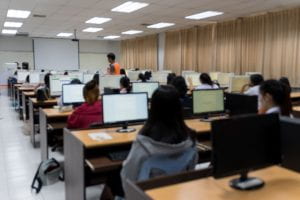
Youth engaged in learning in a computer lab. - Building Pathways to Better Jobs: Through one-on-one employment coaching or staff support, organizations help youth build resumes, practice interviewing, and understand American workplace culture. They also actively build relationships with employers to advocate for their clients and some follow up after program completion to ensure that youth not only find a job but also retain it and advance in their careers.
- Building Bridges to Opportunity: A crucial role of these organizations is building, bridging, and linking social capital—connecting youth with people and institutions outside their immediate community. CBOs and ECBOs connect individuals with employers through job fairs, job shadowing, and coaching, thereby opening doors to upward mobility.
- Creating opportunities for family-sustaining careers: Some organizations offer structured career pathways that guide individuals through education and training for in-demand, family-sustaining careers, such as construction and welding.


The research identified several core challenges that define the experience of newcomer youth seeking employment in Marion County.
- The “Any Job” vs. “Career” Dilemma: The research uncovered a fundamental conflict between a youth’s urgent need for any job to meet financial pressures and the organization’s goals of guiding them toward a sustainable career. While most organizations focus on a long-term approach, newcomer youth may see this as too slow and turn to less stable, informal work.
-
The ‘Social Capital Paradox’: Young newcomers overwhelmingly find their first jobs through informal networks of family and friends (bonding social capital). While this provides quick access to “any job,” it often traps them in low-wage jobs with little room for advancement. In contrast, CBOs work to build connections to broader networks (bridging and linking social capital) that lead to more stable careers. This more strategic approach can feel too overwhelming for youth facing urgent financial and social pressure.

Illustration of social networks and connections, reflecting how community-based organizations help newcomer youth build bridges to opportunity. - A Major Awareness Gap: A primary barrier to success is that most young newcomers do not know that CBOs and their employment services exist. One youth, after living and working in Indiana for four years, was shocked to learn about the free career support available, stating, “I couldn’t believe that anyone had this kind of help. And it’s free!”
- Critical Gaps in Services: There is a significant lack of employment programs targeting youth under 18, especially those who are not in education or working (opportunity youth). Those who arrive late to their school years are also underserved, as they may have missed opportunities to develop job skills during their time in school. Furthermore, key strategies such as bridge programs, career pathways, work-based learning (WBL), employer engagement in training, and entrepreneurship training are underutilized by most organizations, resulting in significant service gaps.
- Systemic Barriers for CBOs: The organizations doing this vital work face their own hurdles. They are chronically underfunded, which limits their ability to expand services. Restrictive funding streams, requiring a work permit for eligibility, exclude many newly arrived youth. Finally, youth services are often “siloed,” with poor coordination between education, workforce, and social service systems, making it incredibly difficult for a young person to navigate services.

Key Recommendations
Addressing these challenges requires a coordinated, cross-sector effort. CBOs cannot do this alone. Here is how university and community partners can help.
-
- Tailor Programs for Younger Youth: It is critical to develop programs that specifically address the needs of the 16-24 age group. This includes creating flexible educational and work opportunities for those who may have missed out on technical education programs in high school.
-
Boost the Entire Support System: Work must be done to break down silos. Funders, government agencies like EmployIndy, educational institutions, and CBOs must collaborate to build an integrated, client-centered system. This means sharing data, coordinating services, and aligning funding to create a smoother, more effective pathway for newcomer youth. Policies should prioritize increased and more stable funding for the community-based organizations that serve as a critical safety net.

Hands representing the collective stewardship of partners working together to uplift and guide newcomer youth. - Invest in Targeted Outreach: Organizations need support to conduct proactive outreach. This includes working with community liaisons and ECBOs to meet newcomer youth and their families where they are and engage them in available services.
-
Expand Promising Programs: Funding and technical assistance should focus on expanding programs that have given promising results. This includes:
- Bridge Programs: More access to High School Equivalency preparation, vocational English (English classes that include specialized vocabulary needed to succeed in a specific trade), and digital literacy courses to prepare youth for career training.
- Work-Based Learning (WBL): Creating more pre-apprenticeships, internships, and job shadowing opportunities to provide invaluable hands-on experience and expand work connections.
- Career Pathways: Pathways programs are a recommended workforce development practice as they guide individuals to family-sustaining careers aligned with local labor demand. They are vital for youth and opportunity youth who face barriers to traditional routes.
- Youth Entrepreneurship Training: Developing dedicated programs for youth interested in starting their own businesses, a growing trend among immigrant communities.
- Integrate Mental Health and Mentoring: The psychological toll of transitioning to a new country and workforce is immense. Employment programs should incorporate trauma-informed care approaches and practices and provide mentoring opportunities to support the well-being and engagement of newcomer youth.

As a next step to strengthen community-university collaborations, the key findings of this study will be shared with participant organizations, not just to report what was learned, but to engage in meaningful discussions and ensure the findings and recommendations resonate with their on-the-ground expertise. International migration is an important pillar of Indiana’s long-term economic and demographic survival strategy. Investing in community-based organizations and aligning systems, ensures that the next generation of Hoosiers is equipped to contribute fully to the state’s economic and civic life.

